
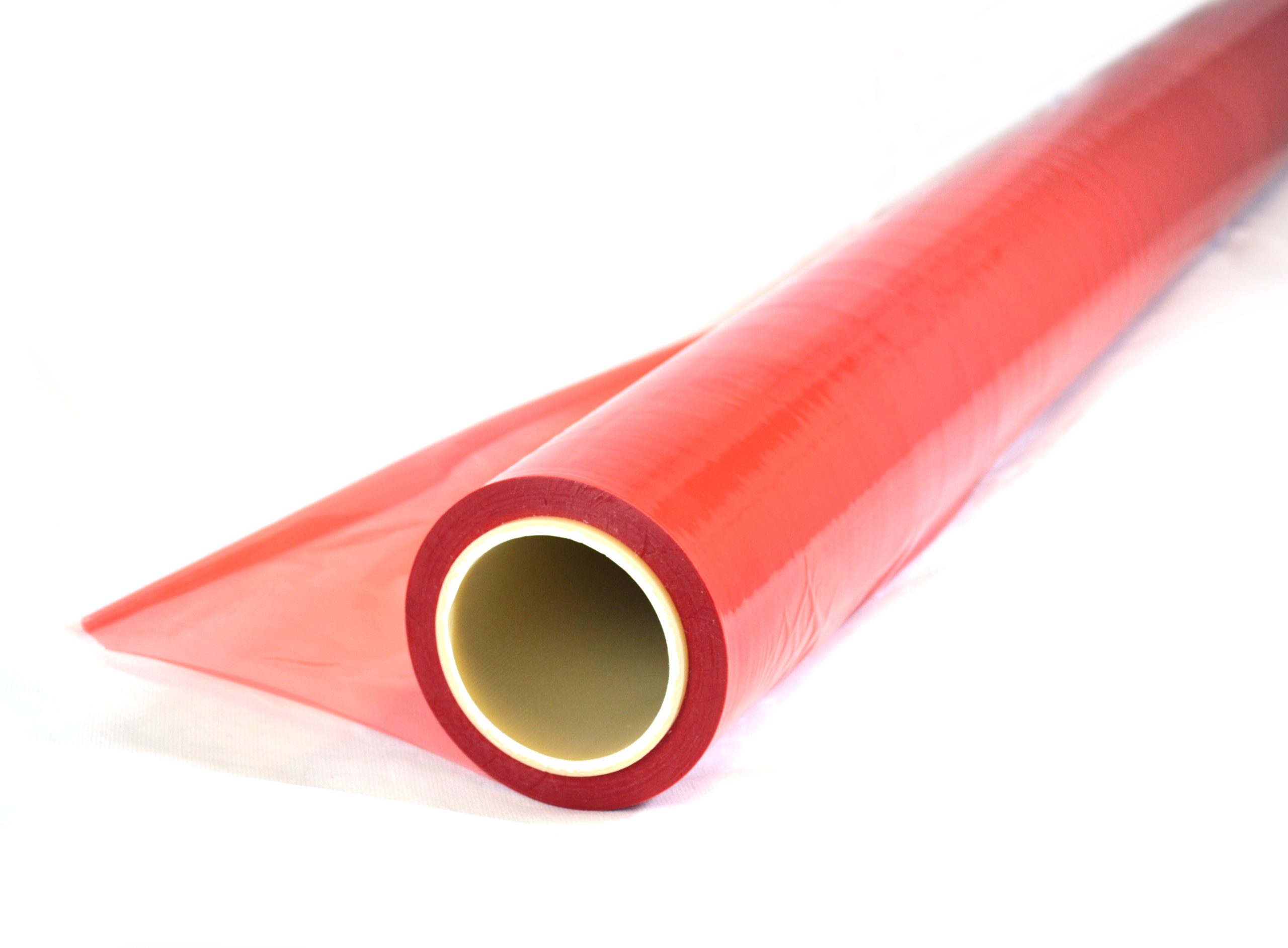
Choosing the Right Release Film for Vacuum Bagging
A release film is a thin non-stick sheet placed directly on the wet laminate (often between Peelply and Breather) to prevent uncured resin from bonding to the bagging materials. In practice you’ll lay down your laminate, then optionally Peelply, then a release film before adding flow media or Breather and then the vacuum bag. Release film (also called “breather separator” or “barrier film”) lets vacuum draw down evenly without sticking to the part. VAC Innovation’s product line includes several cast‐fluoropolymer films in this role, for example, red FEP (VACleaseR1.2) rated to 230 °C and blue ETFE (VACleaseB1.2) rated to 210 °C, as well as polypropylene films and special low‐temperature films for infusion. Each film comes in perforated (P3) or nonperforated form.
_________________________________________________________________________________________
• PTFE (Teflon) Release Film (nonperforated):
Cast PTFE film offers extreme heat resistance and elongation. Vac Innovation’s (VACleaseMRR), red PTFE film, is rated up to ~315 °C. It will release from most resins and conform to complex shapes but is heavier than FEP/ETFE.
• FEP Release Film (VACleaseR1.2):
Red FEP film up to 230 °C. Available nonperforated (VACleaseR1.2) or P3perforated (VACleaseR1.2P3). It provides good release and flexibility for high temp epoxy or prepreg.
• ETFE Release Film (VACleaseB1.2):
Blue ETFE film up to 210 °C. Stronger and lighter than FEP, with high tear resistance. Comes nonperforated (VACleaseB1.2) or perforated (VACleaseB1.2P3).
• Polypropylene Release Film (VACleaseLT30Y1.5):
Yellow low temp PP film up to 150 °C. Very flexible, used for room temperature or moderate cure, and in infusion processes. Available perforated (P3) or not. This film is compatible with epoxy prepreg and works well under flow media.
• Blue Low Temp (Infusion/Debulking) Film (VACleaseLT28B1.5):
Blue film designed for vacuum infusion and debulking cycles. Rated to ~100 °C and compatible with epoxy, polyester, and vinylester systems. Available in perforated (VACleaseLT28B1.5P3) or nonperforated (VACleaseLT28B1.5) versions. It is intended to keep breather and flow media from sticking to the laminate during debulking or infusion.
_________________________________________________________________________________________
Each of these films is a “sacrificial” layer: they don’t bond to resin, so they let you remove the breather/flow media easily after cure. In practice, perforated release film is very common in infusion. The tiny holes in a P3 film channel excess resin into the breather cloth, so the resin can bleed off rather than pool on the part. Perforated release film is essentially a thin plastic sheet with precision holes that manage how excess resin is drawn off the laminate and into the breather layer. When laid over a wet layup and paired with a breather, it allows the vacuum to pull surplus resin through the holes, helping to maintain consistent pressure and reduce resin pooling. It also improves demoulding, the film peels away cleanly after cure and helps reduce trapped air at the flow front.
Nonperforated (solid) release film, on the other hand, blocks resin flow. It simply isolates the laminate from the bagging stack. This is useful when you do not want resin to escape. For example: with prepreg or highflow resins, or when controlling resin content is critical. In this case the release film serves to “easily control the resin content of the laminate” and ensure the breather cloth itself is prevented from adhering to the part. Nonporous release film… is designed to prevent bonding with resin” and is used as the “first barrier” between the laminate and vacuum bag materials.
• Key Tips:
If you’re having problems like resin seeping into or sticking to your breather/flow media, try adding a release film layer. For infusion or debulking cycles, use the perforated release film version, its pinholes let resin drain into the breather cloth. If you need a clean surface finish or are using prepregs, the nonperforated film is ideal to keep resins contained. Always match the film to your cure temperature and resin chemistry: e.g. use PTFE or FEP for very hightemperature epoxies, ETFE for standard aerospace epoxies, and polypropylene or the special blue infusion film for roomtemperature or lowtemp cures. By selecting the right VAC Innovation release film (such as VACleaseR1.2, B1.2, LT30Y, or LT28B variants) you can troubleshoot bonding or flow issues and improve yield on your composite parts.
_________________________________________________________________________

